Counting Activities for Preschoolers
Reciting numbers and counting things are two different skills. Most children master the first long before the second.
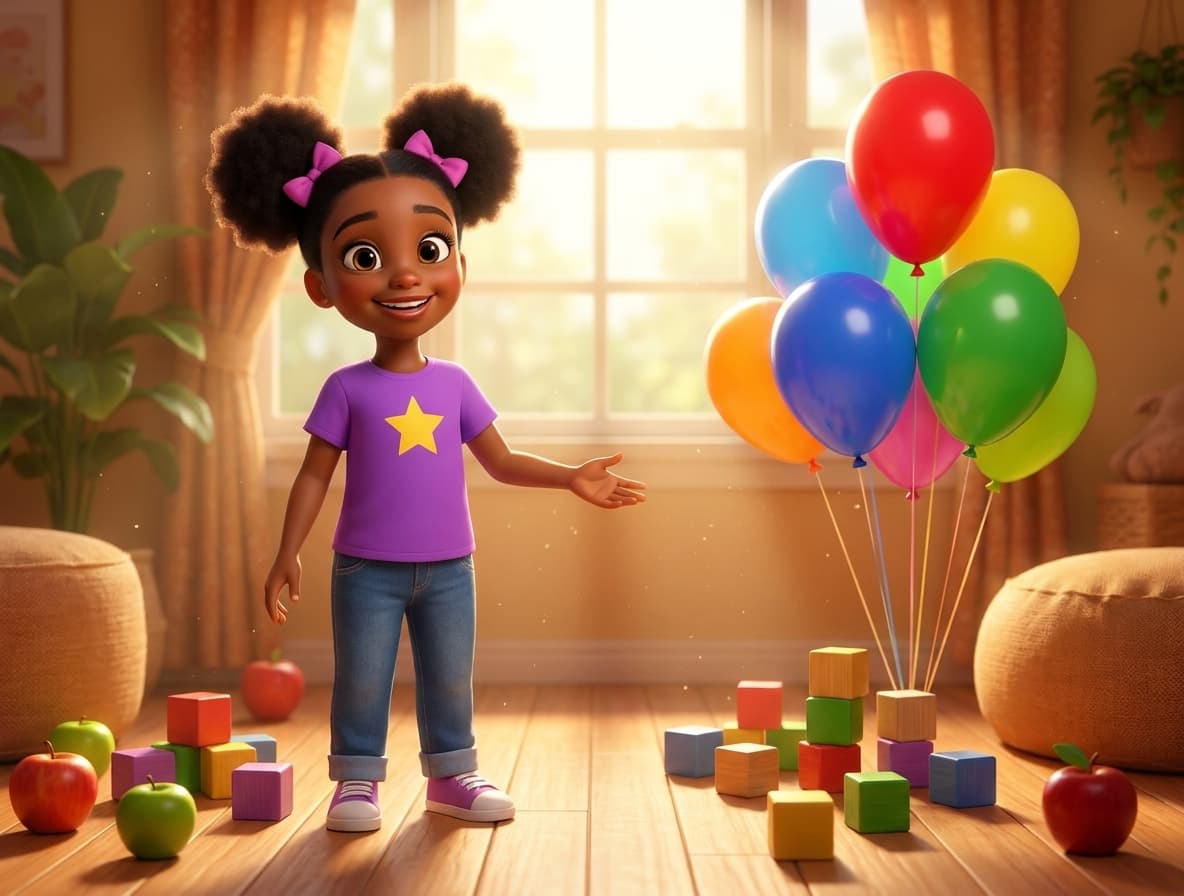
A three-year-old who can rattle off "one two three four five six seven eight nine ten" sounds like they can count. Often they cannot — not yet. Ask them to count seven buttons and they will race ahead of their finger, skip one, count another twice, and land confidently on the wrong number.
That is completely normal, and it is the single most useful thing to understand about early math. Saying the number words is memorized sequence. Counting is matching one word to one object and knowing the last word tells you how many. The activities below build the second skill, which is the one that matters.
The four ideas underneath counting
You never need to name these for your child. But knowing which one is missing tells you what to practice.
- One-to-one correspondence — one number word for exactly one object. Touching each item as they count is what teaches this, so let them use their fingers.
- Stable order — the number words always come in the same sequence.
- Cardinality — the last number said is the answer. Test it by asking "so how many?" after they count. A child who recounts from one has not got this yet.
- Conservation — five things are still five things when you spread them out. Many four-year-olds are certain the spread-out row has more.
Everyday counting that costs nothing
- Count the stairs on the way up, every day. Repetition in a fixed order is exactly what builds the sequence.
- Set the table together — four plates, four forks. This is one-to-one correspondence in its purest form.
- Count out loud while doing real things: five blueberries into the bowl, three more minutes, two shoes.
- Play with dice and dominoes. Recognising a pattern of four dots without counting them is called subitising, and it is a strong predictor of later math.
- Count backwards from five for lift-offs and clean-ups. Backwards counting is much harder and lays the ground for subtraction.
- Sort the laundry into piles and count each pile. Sorting and counting reinforce each other.
Games that build number sense
- "How many now?" — count a small pile together, then add one and ask again. The goal is for them to say "six" without recounting from one.
- Hide and reveal. Put five counters under a cup, take two away, and ask how many are hidden. This is early addition and subtraction with no symbols in sight.
- Snap cards with numerals and dot patterns, so the written numeral gets tied to a real quantity.
- Number hunt. Find the number 3 on doors, buses, microwaves and price tags while you are out.
- Build a tower with exactly seven blocks. Building to a target number is more engaging than counting for its own sake.
What good looks like at each age
These are rough midpoints and the normal range around them is wide. A child who is behind on one and ahead on another is the ordinary case, not the exception.
- Age 3 — counts aloud to about 10, accurately counts 2–3 objects, matches some numerals to quantities.
- Age 4 — counts aloud to 20, accurately counts 5–10 objects, usually answers "how many?" without recounting, recognizes numerals to 10.
- Age 5 — counts to 30 or beyond, counts 20 objects reliably, counts on from a number rather than restarting, begins simple adding and taking away with real objects.
The mistake worth avoiding
Do not push for a bigger number. It is tempting to work on counting to 50 because it sounds impressive, but a child who can recite to 50 and cannot accurately count nine buttons has a gap that will show up later in school.
Depth beats range. Solid, accurate counting to 10 with real objects is worth far more than shaky recitation to 100.
Bring these stories to life with your child
Emeka Explores turns each of these into an illustrated, read-along lesson with a playful quiz. Start free — no card needed.
Frequently asked questions
What age should a child count to 10?
Many children can recite to 10 around age 3 and count 10 real objects accurately around age 4. Reciting comes first and the gap between the two is normal — accurate counting of objects is the skill worth practising.
Why can my child say numbers but not count objects?
Because they are different skills. Saying "one two three" is a memorized sequence. Counting requires matching exactly one number word to each object and understanding that the final word answers "how many". Slow them down and have them touch each item as they count.
What is one-to-one correspondence?
Assigning exactly one number word to exactly one object while counting. It is the foundation of all counting, and touching or moving each object as it is counted is the most reliable way to build it.
How can I help my preschooler with math at home?
Count real things in ordinary routines — stairs, plates, snacks, socks — rather than using worksheets. Small, frequent, concrete counting builds number sense far better than formal practice at this age.
Should my preschooler be doing addition?
Only with real objects and no written symbols. Adding one more to a small group, or hiding some counters and asking how many are left, is genuine early addition. Written sums can wait for school.