How to Teach the Alphabet to Preschoolers
Start with sounds, not the alphabet song — and start with the letters your child already cares about.
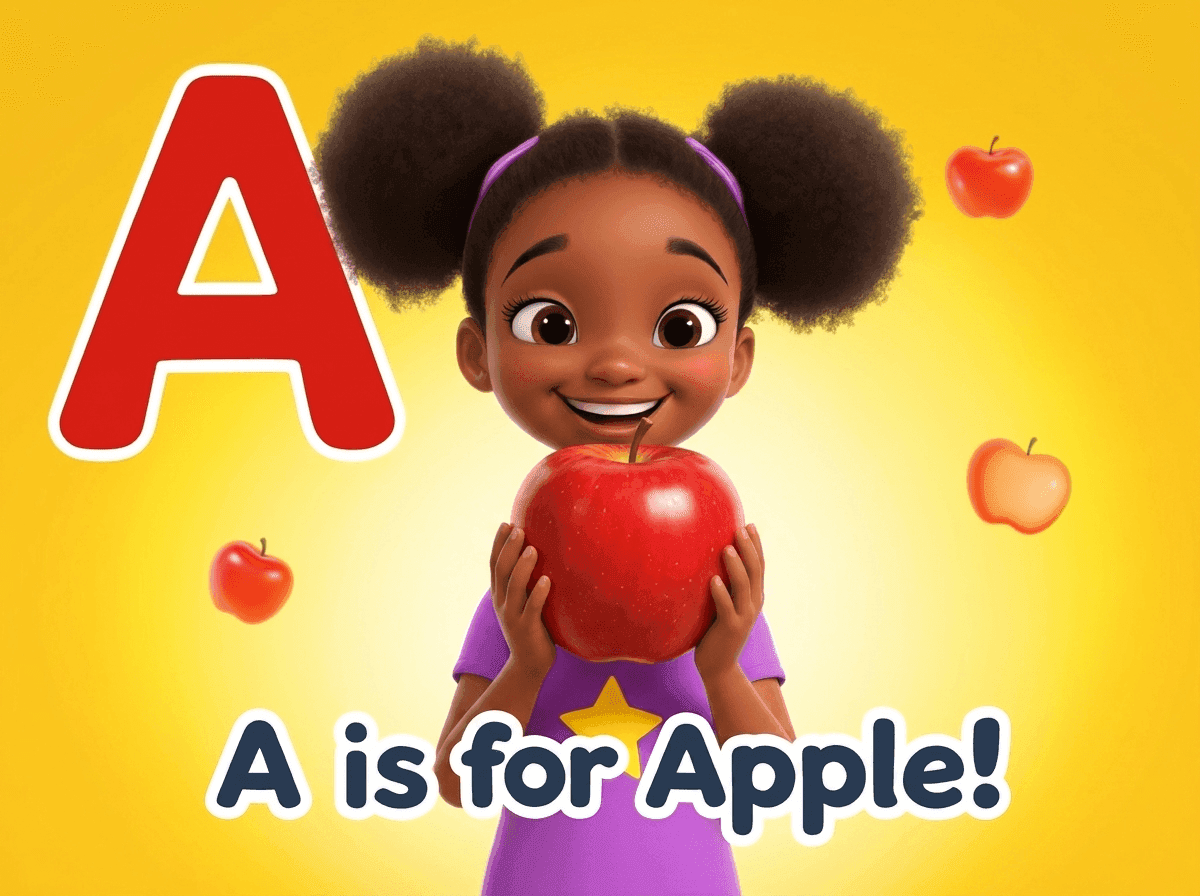
Most of us teach the alphabet in the order we learned it: A, B, C, all the way to Z. It feels orderly. It is also one of the harder ways to do it, because the alphabet song teaches children children the names of letters, when what they actually need first are the sounds.
This guide lays out a gentler order that early-literacy teachers use, what to do when your child loses interest, and roughly what to expect at each age. None of it needs worksheets, and none of it needs to take more than a few minutes a day.
Start with sounds, not letter names
A child who knows that "B" is called "bee" still cannot read the word "bat." A child who knows that B says /b/ is already most of the way there. Letter sounds are what unlock reading; letter names come along for the ride.
So when you point at a letter, say the sound first: "That's /m/ — mmm, like Mama." Add the name later, once the sound is comfortable. If your child has already learned the alphabet song, that is fine — nothing is broken. Just start pairing each letter with its sound.
Keep sounds short and clean. It is /b/, not "buh." That extra "uh" is small, but it is exactly what makes sounding out words confusing later: "buh-a-tuh" does not sound much like "bat."
Which letters to teach first
Not A. Start with the letters that mean the most to your child and that do the most work in real words.
- The first letter of their own name. It is the single most motivating letter in the alphabet, and most children learn it before any other.
- High-frequency, easy-to-say sounds next: m, s, t, a, p, f. With just those you can build real words — mat, sat, tap, pat — which makes reading feel like a payoff rather than a chore.
- Save the confusable pairs. b and d, p and q, m and n look and sound alike. Teach them far apart in time, never in the same week.
- Save the rare letters for last. A preschooler meets x, q, and z about as often as they meet a xylophone.
- Lowercase matters more than uppercase. Roughly 95% of the letters in any book are lowercase, yet most alphabet toys teach capitals.
What this looks like day to day
Five minutes beats fifty. A short, happy burst every day builds far more than a long session once a week that ends in tears.
Hunt letters in the wild. Stop signs, cereal boxes, the bus, their name on a cubby. Letters in real life feel like discoveries; letters on a worksheet feel like a test.
Let them use their whole body. Trace letters in sand, bath foam, or the air. Fine motor control lags well behind letter knowledge at this age, so a child can often recognize a letter long before they can write one neatly.
Read aloud more than you drill. Shared reading does more for early literacy than any single alphabet activity — it builds vocabulary, story sense, and the belief that print is worth decoding.
When your child pushes back
Resistance almost always means the task is too hard, too long, or too repetitive — not that your child is behind. Shorten it, make it sillier, or drop it for a week and come back.
Watch for the moment it stops being a game. The goal at three, four, and five is that letters feel friendly. A child who associates letters with pressure carries that into kindergarten, and undoing it takes far longer than waiting a few weeks would have.
Bring these stories to life with your child
Emeka Explores turns each of these into an illustrated, read-along lesson with a playful quiz. Start free — no card needed.
Frequently asked questions
What age should a child know the alphabet?
Most children recognize some letters by age 3, know about half by age 4, and know most letter names and many sounds by the end of kindergarten (age 5–6). There is a very wide normal range. A child who knows ten letters at four is not behind.
Should I teach uppercase or lowercase letters first?
Teach them together, but lean lowercase. Uppercase letters are easier to tell apart and easier to write, so they are a fine entry point — but around 95% of the letters your child will meet in books are lowercase, so those are the ones that pay off in reading.
Should I teach letter names or letter sounds first?
Sounds first. Letter sounds are what let a child actually decode a word. Names are useful for talking about letters, but a child who knows the sounds can start reading simple words far sooner.
How long should alphabet practice last?
Three to five minutes for a three-year-old, five to ten for a five-year-old. Daily and short beats long and occasional. Stop while your child still wants more — that is what makes them come back.
What if my child is not interested in letters at all?
Back off the direct teaching and read aloud instead. Interest in print usually grows out of loving books, not the other way round. Point out letters in things they already care about — their name, a favorite sign, a cereal box — and let curiosity do the work.
Keep reading
- Teaching the Alphabet with Black CultureEvery letter is a chance to celebrate a hero, a place, or a proud tradition.
- Kindergarten Readiness ChecklistThe short answer: fewer academics than you think, and more independence than you expect.
- Counting Activities for PreschoolersReciting numbers and counting things are two different skills. Most children master the first long before the second.