Black History Month Activities for Kids
Ideas that work at home or in a classroom — and that are worth repeating in March.
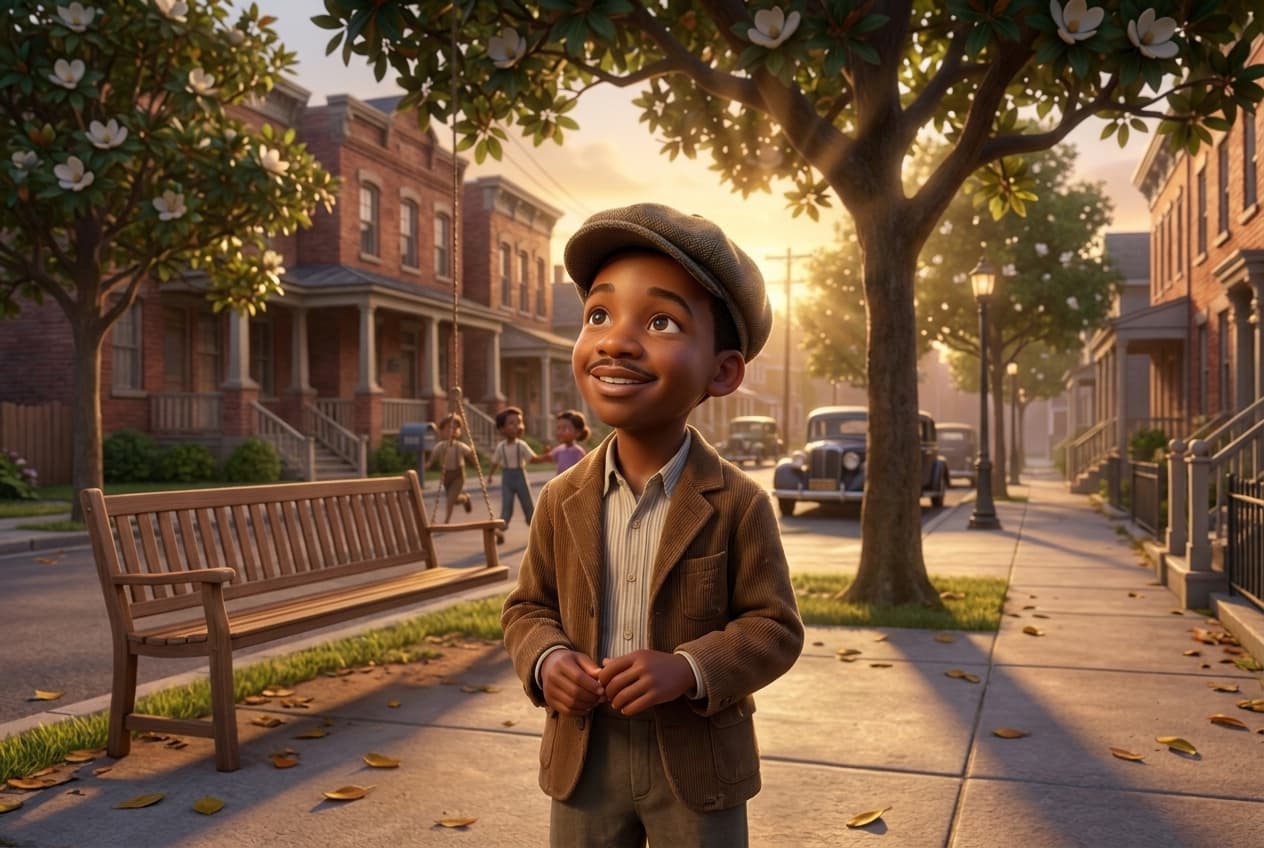
Black History Month tends to arrive with the same four names and the same worksheet. Children come away able to recite that Rosa Parks sat down and Dr King had a dream, without much sense of who those people actually were, or that Black history contains inventors, dancers, mathematicians, poets and astronauts too.
The activities below are built for children aged four to nine. They are simple enough for a weeknight, they lean on stories rather than dates, and — the main thing — none of them stop working on the first of March.
A story a day
The simplest structure that works: one person, one short story, one question. Five minutes at bedtime or the start of a lesson.
Vary the kind of greatness on purpose. If every story is about protest, children learn that Black history is only about struggle. Mix in Bessie Coleman flying planes, Misty Copeland dancing, Katherine Johnson doing the math that got astronauts home, Langston Hughes writing poems.
Then ask one question and stop: "What would you have done?" or "How do you think she felt that morning?" The reflection is the part that stays.
Family and classroom activities
- Make a hero wall. Each day, add a drawing or photo of the person you read about. By the end of the month a child can see the sheer variety of what Black excellence looks like.
- Invent something. Read about Black inventors, then let your child design a solution to an annoyance in their own house. Label it, name it, present it at dinner.
- Cook something with a history. Trace one dish back — Southern, Caribbean, West African — and talk about how it traveled to your table.
- Learn one song properly. "Lift Every Voice and Sing" is a good place to begin. Sing it, then talk about what the words mean.
- Interview an elder. A grandparent or neighbour, three questions, recorded on a phone. Family memory is history, and children take it far more seriously when they collect it themselves.
- Visit or virtually tour a museum. Many Black history museums have free online collections designed for children.
- Support a Black-owned business in your neighborhood, and tell your child why you chose it.
Talking about the hard parts
You do not have to explain the full history of slavery to a five-year-old in order to tell the truth. "A long time ago some people were treated unfairly because of their skin, and that was wrong, and people worked very hard to change it" is honest and age-appropriate.
Lead with the person, not the violence done to them. Then follow your child's questions — answer exactly what they ask and no more. Children ask for the amount they are ready for.
End on what changed, and on what people built. Hope is not a dodge here; it is the accurate ending.
Keep it going after February
The strongest thing you can teach a child is that this is not a special topic that visits once a year. Keep one Black history story in the regular rotation every few weeks, all year.
That single habit does more than any February display, because it removes the quiet implication that these stories are a detour from the real history.
Bring these stories to life with your child
Emeka Explores turns each of these into an illustrated, read-along lesson with a playful quiz. Start free — no card needed.
Frequently asked questions
How do you teach Black History Month to preschoolers?
Through single, vivid stories about real people, told warmly and briefly. Focus on what the person did and what kind of child they were, keep it to a few minutes, and end with one question. Skip dates and timelines entirely at this age.
What are good Black History Month activities for elementary students?
A daily story paired with a hero wall, an invention challenge inspired by Black inventors, cooking a dish with a traceable history, learning "Lift Every Voice and Sing", and interviewing an older relative. All work at home or in a classroom.
How do I explain slavery to a young child?
Keep it to one honest sentence — that some people were forced to work and were not free, and that it was wrong and was changed. Lead with the courage of the people rather than the cruelty done to them, and let your child's questions set the pace.
Which Black history figures should kids learn beyond MLK and Rosa Parks?
Bessie Coleman, Katherine Johnson, George Washington Carver, Mae Jemison, Misty Copeland, Langston Hughes, Shirley Chisholm, Thurgood Marshall and Ida B. Wells all have stories that work beautifully for young children — and together they show that Black history is science, art, sport and law, not only protest.
When is Black History Month?
February in the United States and Canada, and October in the United Kingdom. The stories, of course, belong in a child's year round.
Heroes in this guide
Keep reading
- Black History Heroes for KidsA kid-friendly starting point for teaching Black history — any month of the year.
- Black Inventors for KidsThe traffic light. The Super Soaker. Things your child already knows — invented by people who look like them.
- Juneteenth for KidsSimple words for a big day — and joyful ways to celebrate as a family.