Social Emotional Learning Activities for Kids
Five-minute activities that help a child name what they feel — and know what to do next.
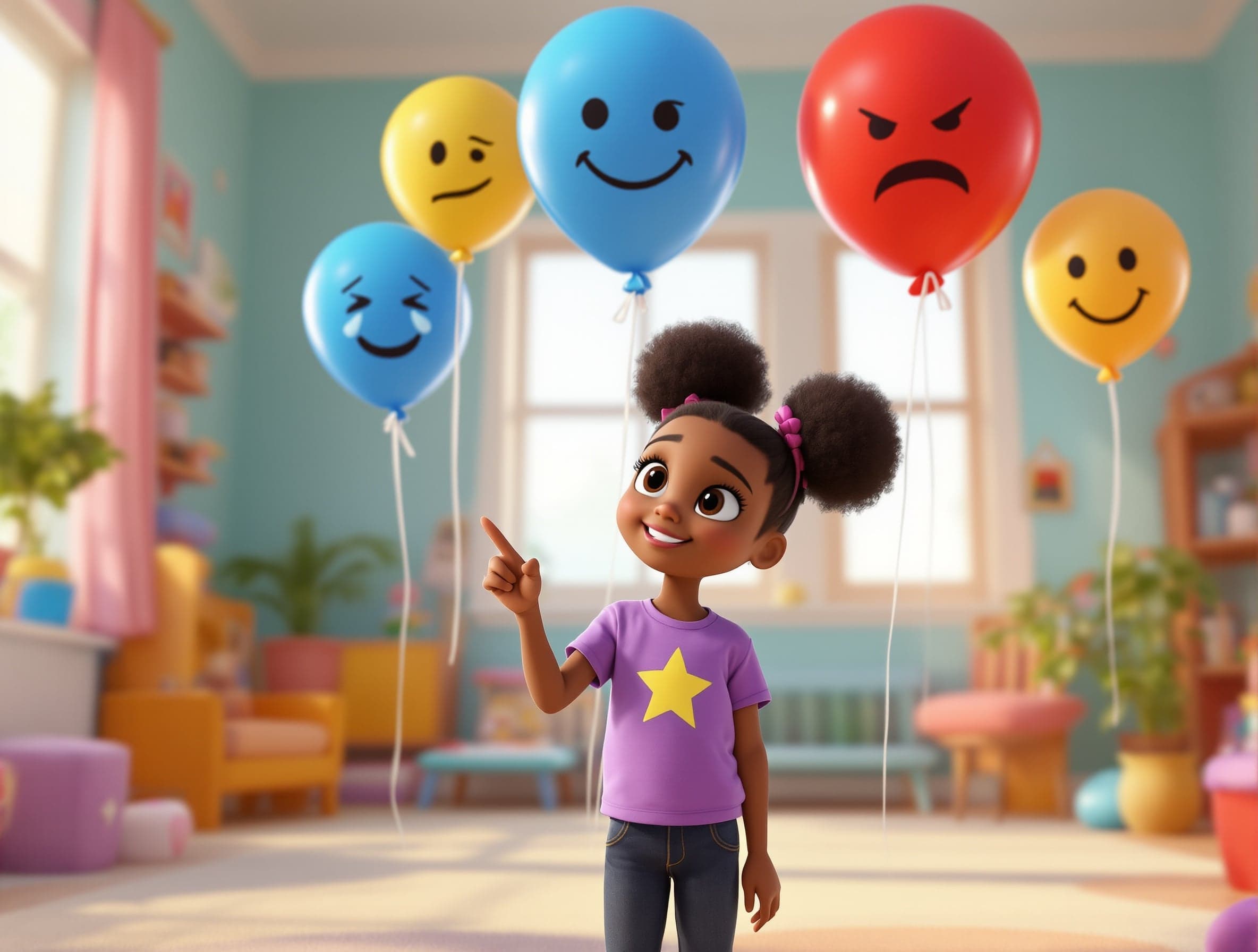
Social emotional learning — SEL — is the skill of understanding your own feelings, managing them, and getting along with other people. It sounds academic, but for a young child it is beautifully concrete: knowing the word for what is happening inside them, and knowing what to do about it.
You do not need a curriculum or a spare hour. The activities below take about five minutes each and fit into car rides, bedtime, and the ten minutes after a meltdown.
Activities for naming feelings
- Feelings check-in — at dinner or bedtime, everyone names one feeling from their day and why. Grown-ups go first, and go honest.
- Feelings faces — draw six faces together (happy, sad, angry, scared, excited, tired) and let your child point to theirs instead of explaining.
- Weather report — ask "is your inside weather sunny, cloudy, or stormy today?" Children who cannot yet say "frustrated" can almost always say "stormy".
- Name it in stories — while reading, pause and ask "how do you think he feels right now?" It is far easier to practice on a character than on yourself.
Activities for calming big feelings
- Balloon breathing — breathe in for four counts to fill the balloon, out for four to let it go. Do it with them, not at them.
- Build a calm-down corner — a pillow, a book, a soft toy. Frame it as a place to visit, never as a punishment.
- Squeeze and release — squeeze fists tight for five seconds, then let go and notice the difference. Physical, fast, works in public.
- Name it to tame it — simply saying "you are really angry right now, and that is okay" out loud often lowers the temperature more than any fix.
Activities for kindness and friendship
- Kindness mission — each day, one small deliberate kind act, shared at dinner.
- Sharing practice — role-play with toys: what do you say when you both want the same thing?
- Repair, do not just apologize — after a conflict, ask "what could you do to make it better?" Repair teaches more than a forced sorry.
- Notice the helper — point out kindness when you see it in public so your child learns to spot it.
What actually makes SEL work
Consistency beats intensity. Two minutes every day does more than an hour once a month.
Model it out loud. "I am feeling frustrated, so I am going to take three breaths" teaches more than any lesson, because your child sees the whole sequence.
Do it when things are calm. Skills are built in the quiet moments and used in the loud ones — you cannot teach balloon breathing mid-meltdown.
Bring these stories to life with your child
Emeka Explores turns each of these into an illustrated, read-along lesson with a playful quiz. Start free — no card needed.
Frequently asked questions
What is social emotional learning for kids?
Social emotional learning is how children learn to recognize and manage their feelings, show empathy, build friendships, and make good decisions. For ages 4–9 it mostly looks like naming emotions, learning to calm down, and practicing kindness and sharing.
What are some easy SEL activities to do at home?
A daily feelings check-in at dinner, balloon breathing for big emotions, a calm-down corner, and a daily kindness mission are four of the simplest. Each takes about five minutes and needs no materials.
At what age should you start social emotional learning?
As early as age 3. Toddlers and preschoolers can learn to name basic feelings — happy, sad, mad, scared — long before they can manage them. Naming comes first; regulation follows with practice and time.
How do I help my child calm down during a tantrum?
In the moment, connect before you correct: get low, stay calm, and name what you see ("you are really angry"). Save the teaching for afterwards, when your child can actually hear you. The skills you practice during calm moments are the ones available during hard ones.